
Sesow Art and Article in Standart print Magazine – EUROPE 2010:
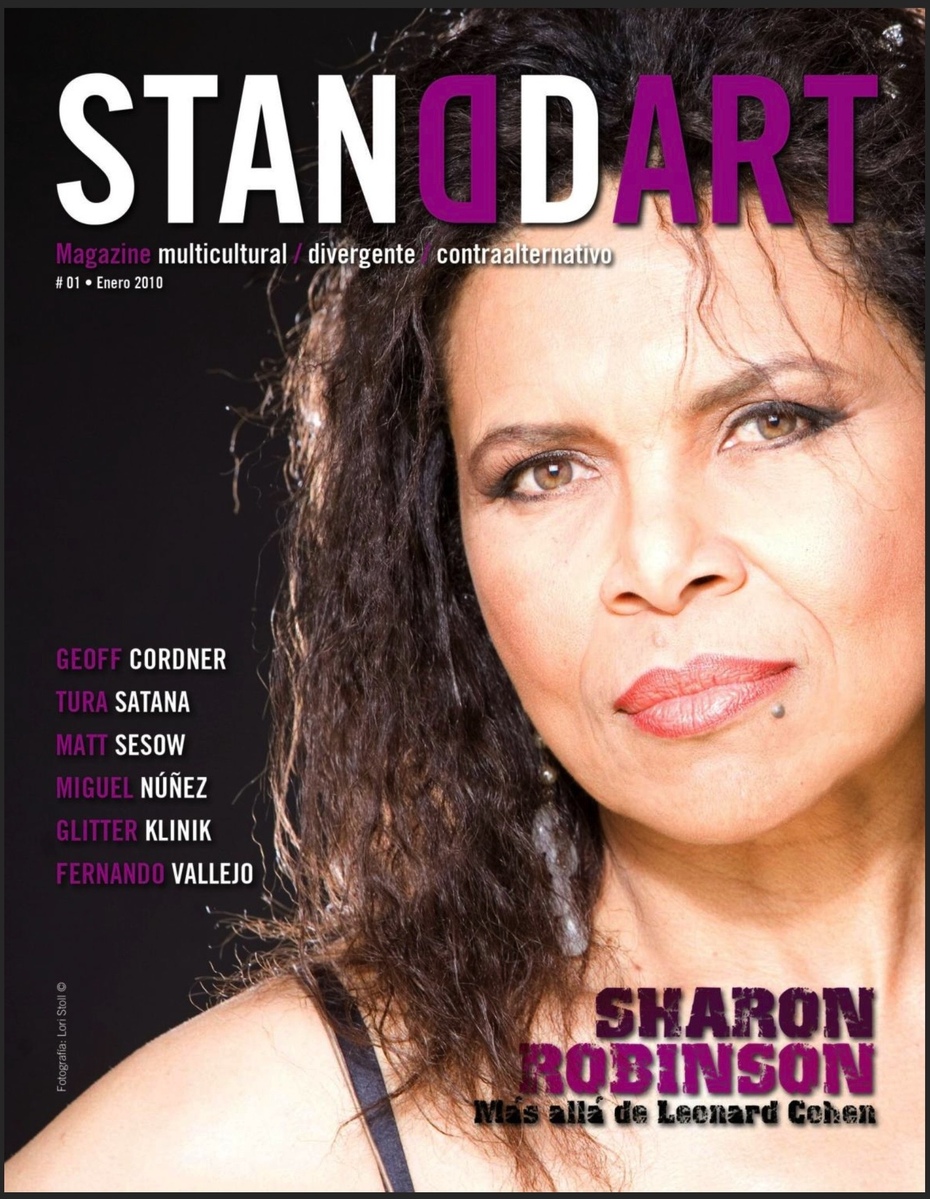
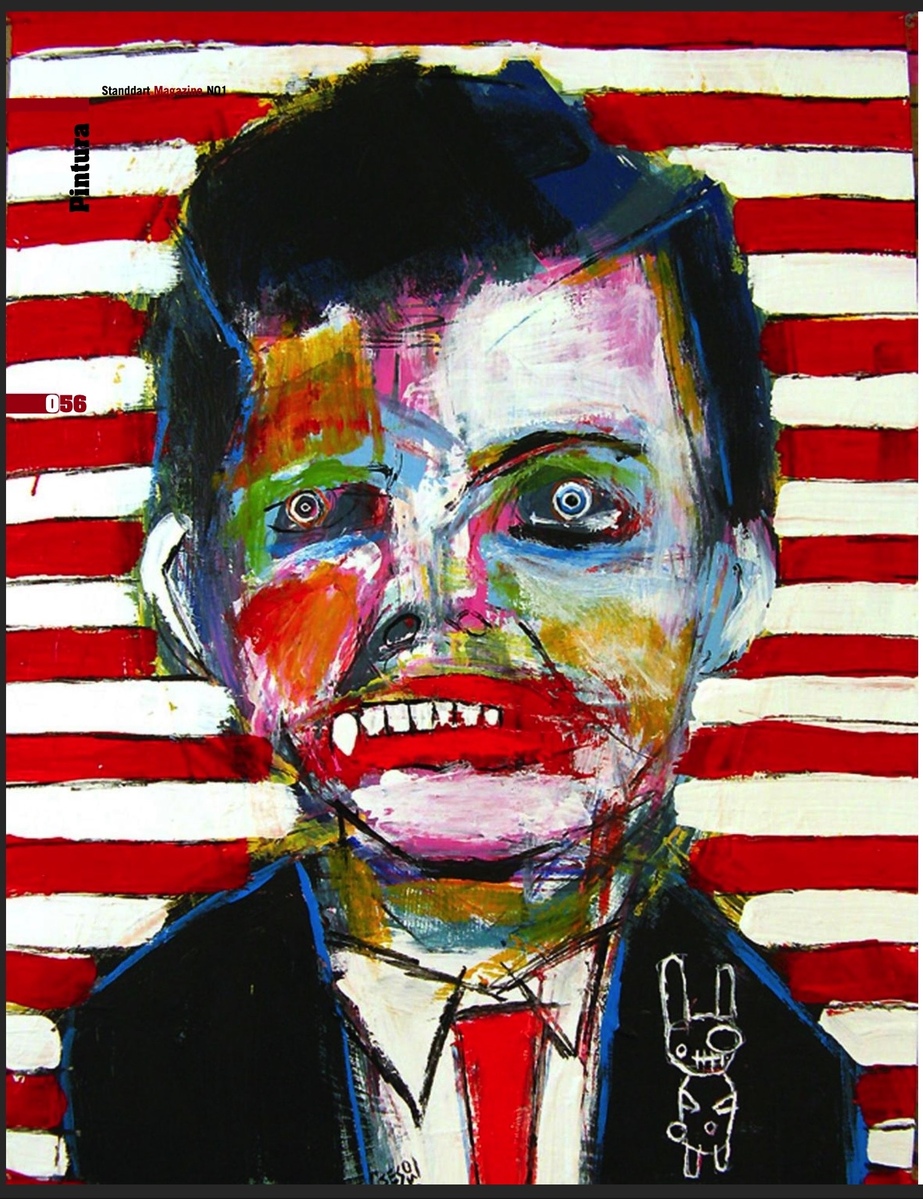
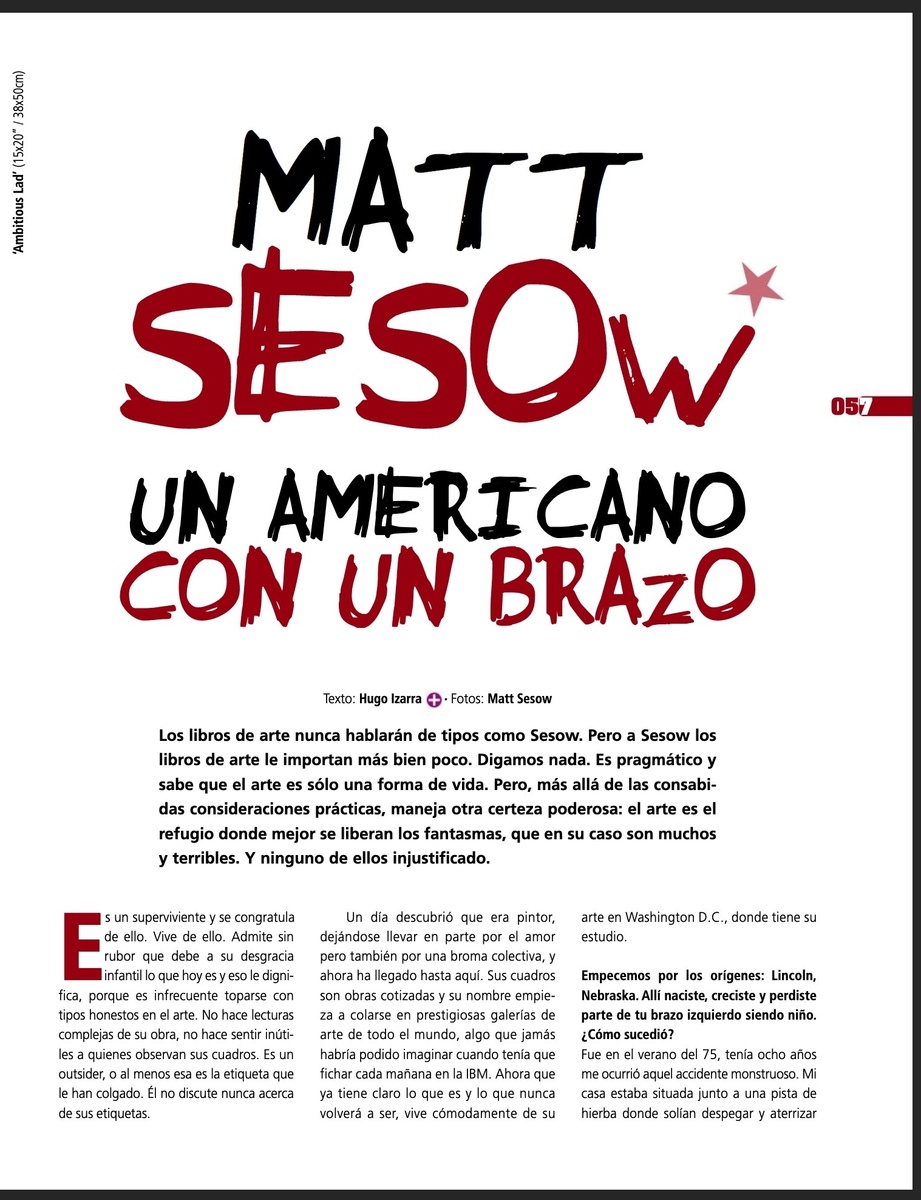
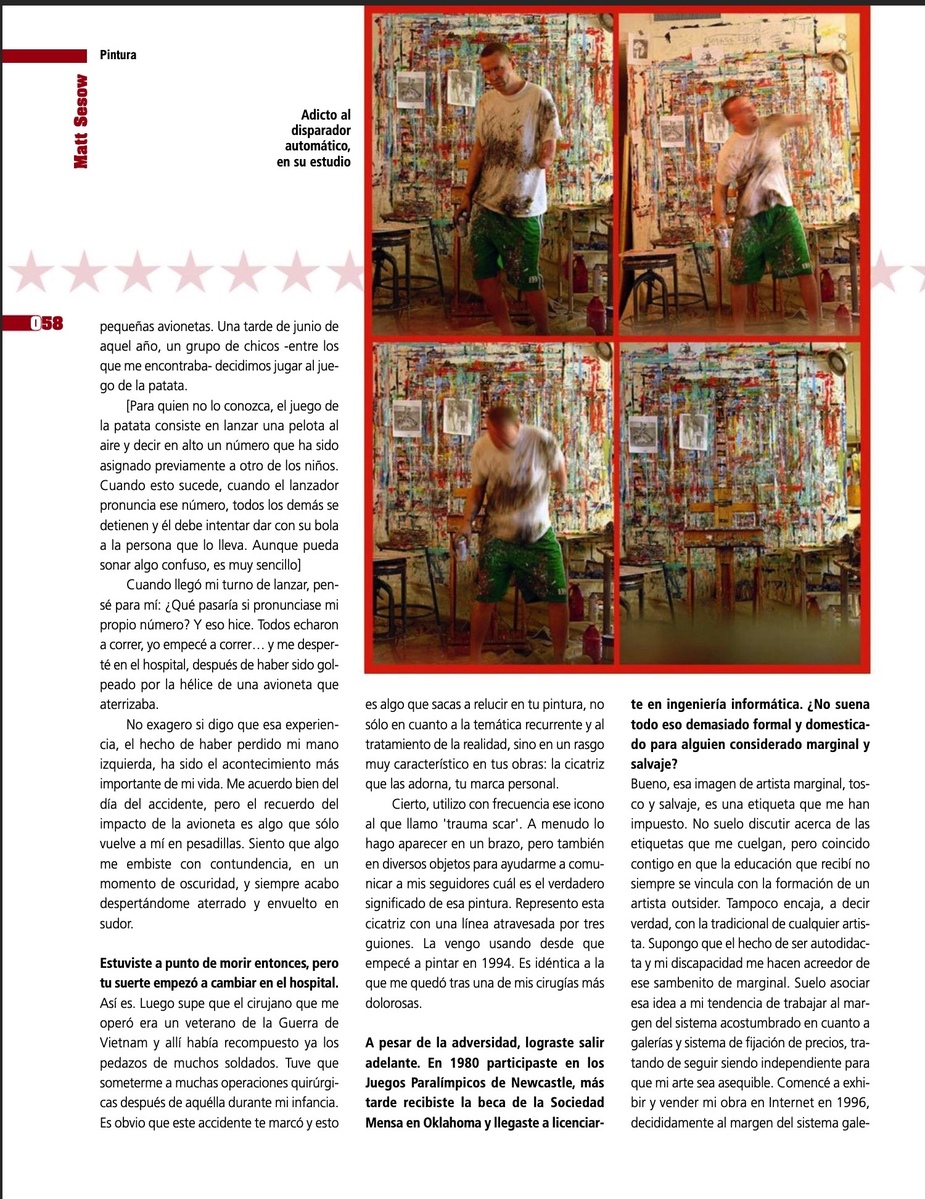
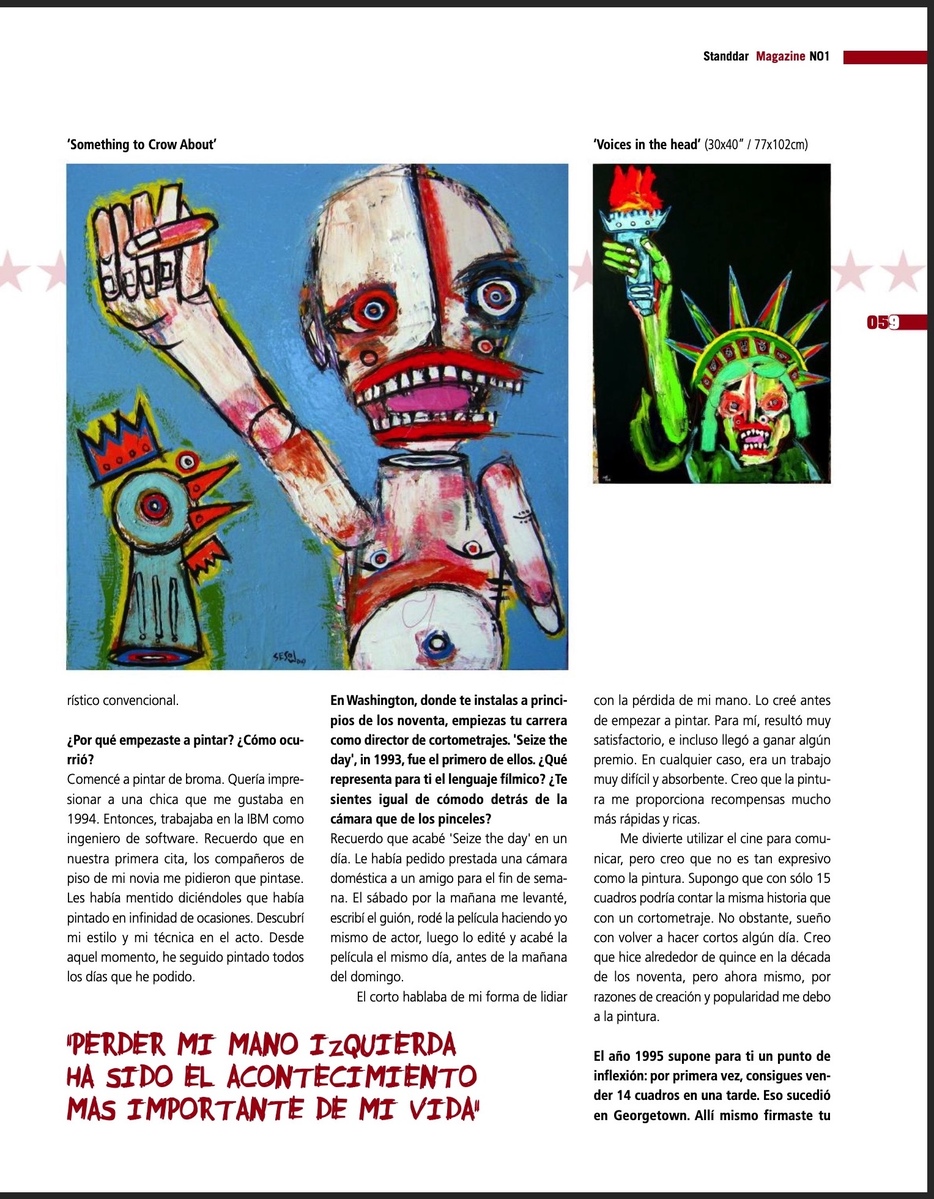
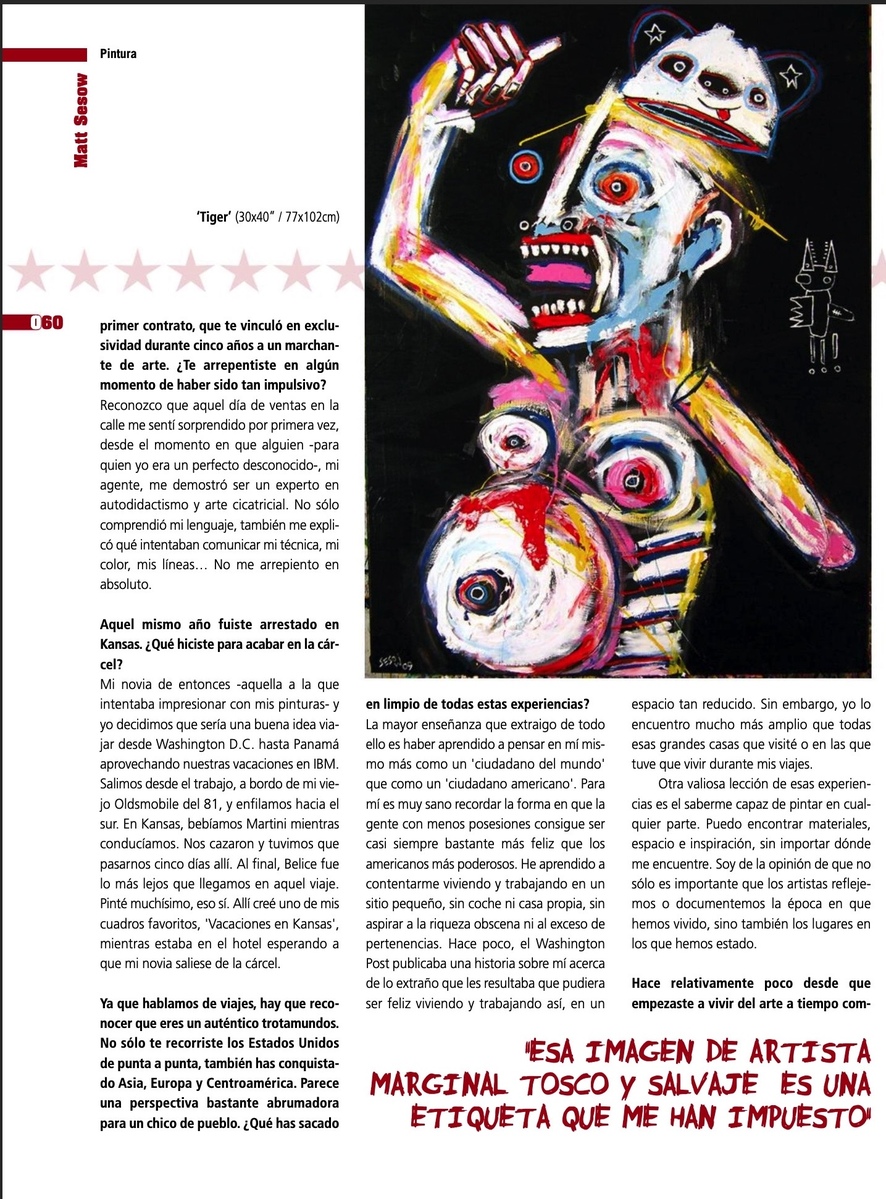
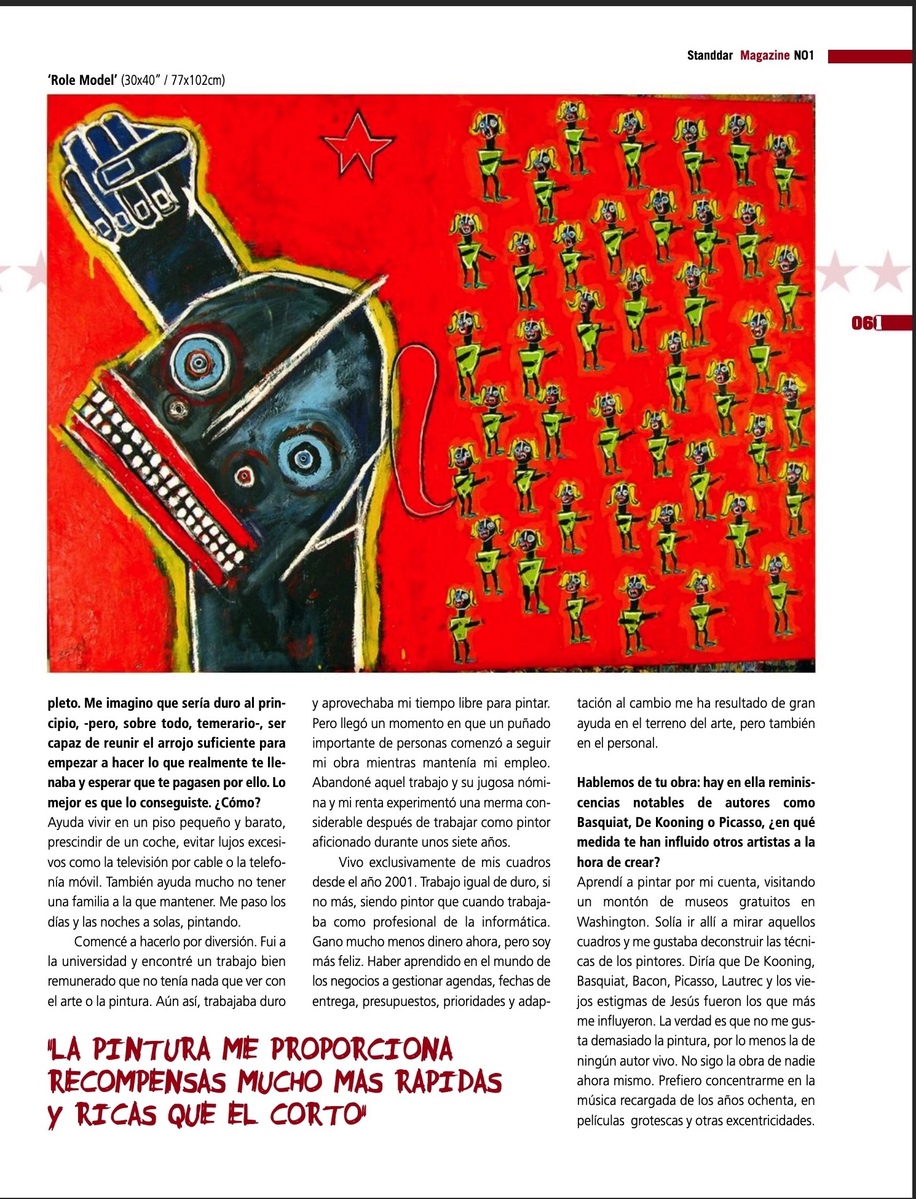
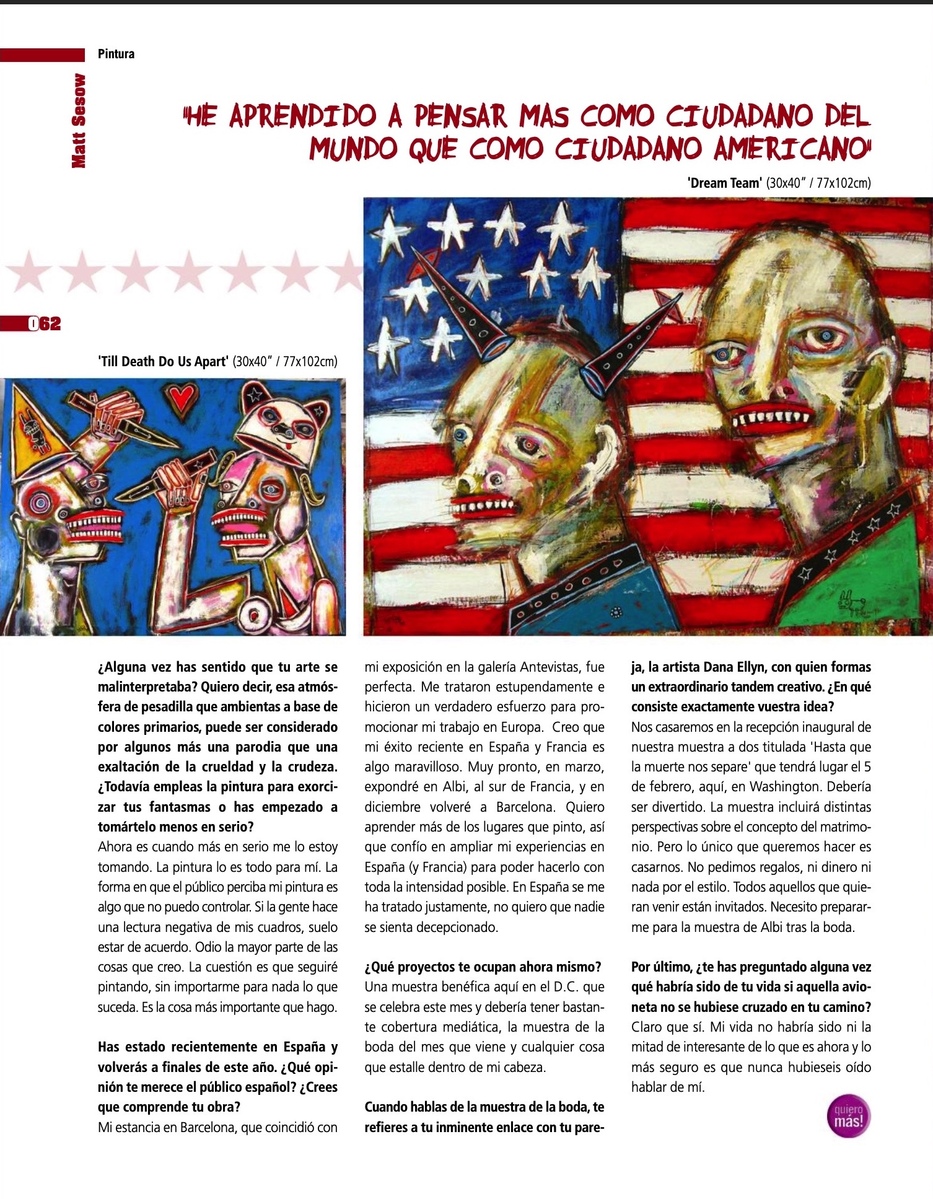
Sesow Art and Article in Standart print Magazine – EUROPE 2010
(translated):
Matt Sesow: An American with One Arm
Text: Hugo Izarra • Photos: Matt Sesow
Art books will never talk about guys like Sesow. But Sesow couldn’t care less about art books. Let’s be honest: he doesn’t care at all. He is pragmatic and knows that art is just a way of life. But, beyond practical considerations, he handles another powerful certainty: art is the refuge where ghosts are best set free, and in his case, there are many, terrible ghosts. None of them unjustified.
He is a survivor and proud of it. He lives by it. He admits without shame that he owes his dignity to the childhood tragedy that defined him. And that dignity is what makes it rare to encounter such honest types in art. He doesn’t read dense art theory books that make others feel inadequate when looking at his paintings. He’s an outsider, or at least that’s the label they’ve pinned on him. He doesn’t argue about his labels.
One day he discovered he was a painter, letting himself be carried by his love for art and also by collective humor, and now he has made it this far. His paintings are coveted, and his name is beginning to appear in prestigious galleries around the world, something he never imagined when he used to clock in every morning at IBM. Now he does what he loves, and he’ll never go back to what he once was, comfortably creating art in Washington, D.C., where he has his studio.
Let’s start with the origins: Lincoln, Nebraska. You were born, raised, and lost part of your left arm as a child. How did it happen?
“It was the summer of ’75, I was eight years old when this monstrous accident occurred. My house was situated next to an airstrip where planes took off and landed.”
It was an afternoon in June of that year when a group of kids, including me, decided to play the game of the potato.
[For those who don’t know, the game of the potato involves throwing a ball into the air and calling out a number that has been previously assigned to one of the kids. When this happens, the person who threw the ball shouts the number, and the others freeze while the person called has to try to hit the others with the ball. Although it sounds a bit confusing, it’s quite simple.]
When my turn came to throw the ball, I thought: “What number should I call out? My own number?” And that’s what I did… Everyone stopped, and I ran to catch the ball. Then I woke up in the hospital after being struck by the propeller of a small plane that was landing.
I don’t exaggerate when I say that this experience—the fact of having lost my left hand—has been the most important event of my life. I remember the day of the accident vividly, but I only feel the impact of the plane’s propeller again in my nightmares. It’s as if something within me snapped for good in an instant of confusion, and I was left startled and wrapped in a strange aura.
You almost died that day, but luckily your life began anew in the hospital.
That’s right. Soon after, a skilled surgeon who had served in the Vietnam War rebuilt the rest of my arm. All that was left were some scars, and that’s how I began to gain a new appreciation for art, something I had never paid much attention to before. This experience marked me and remains something that regularly shines through in my painting, not only when it comes to recurring themes or the treatment of reality but also as a very characteristic trait of my works: the scar that adorns them, my personal mark.
True, I often use that icon in my art, something I call the “trauma scar.” It often involves the appearance of an arm but also shows up in various objects to help communicate to my followers the true significance of that painting. It represents this scar with an inner line running across any surface. I’ve been using it since I started painting in 1994. It’s an imprint of my many surgeries.
Despite the adversity, you managed to move forward. In 1980, you participated in the Paralympic Games in Newcastle. Later, you received a scholarship from the Mensa Society in Oklahoma and earned a degree in computer engineering.
Isn’t that world too formal and domesticated for someone considered marginal and wild?
Well, that label of a marginal artist, or wild artist, is one imposed on me. I don’t usually argue about the labels given to me because I agree with you that the education I received is often linked to the formation of an outsider artist. It fits me, here and there, with the traditional culture of artists. I guess it’s part of being self-taught, and my disability makes me approach this field from another angle. I also know that I tend to work outside the system typically used by galleries and price-fixers, trying to stay independent so that my art remains affordable. I began exhibiting and selling my work online in 1996, decidedly outside the gallery system.
Why did you start painting? How did it happen?
I started painting for a girl. I wanted to impress a girl I liked in 1994. At the time, I was working at IBM as a software engineer. I remember that on our first date, my girlfriend’s coworkers asked me to paint. They had told countless stories about how I had painted on various occasions. I discovered my style and technique on the spot. Since that moment, I’ve been painting every day, as much as I can.
In Washington, where you settled in the early 1990s, you began your career as a short film director. “Seize the Day,” in 1993, was your first. What did it represent for you in terms of cinematic language? Do you feel as comfortable behind the camera as you do with brushes?
I remember I finished “Seize the Day” in one day. I had borrowed a domestic camera from a friend for the weekend. On Saturday morning, I got up, wrote the script, shot the movie that same day, and edited it that evening. I finished it by Sunday morning.
The short film spoke about how to deal with the loss of my hand. I created it before I began painting. For me, it was very satisfying, and it even reached a certain audience. In any case, it was a very difficult and exhausting job. I believe painting provides faster and more rewarding results.
Painting is a universal means of communication, but I don’t think it speaks the same language as film. With just 15 paintings, you could tell the same story as a two-hour movie, but with greater impact, given that the visual experience of painting directly engages the viewer in a much more dynamic way.
“Losing my left hand has been the most important event of my life.”
Your first contract tied you exclusively to an art dealer for five years. Do you regret being so impulsive at that moment?
I admit that the day of the street sale, when I was surprised for the first time, from the moment someone—for whom I was a complete stranger—my agent, demonstrated expertise in self-taught and scarred art. Not only did he understand my language, but he also explained what they were trying to convey through my technique, my color, my lines… I don’t regret it at all.
That same year you were arrested in Kansas. What led you to end up in jail?
My girlfriend at the time—the one I was trying to impress with my paintings—and I decided it would be a good idea to travel from Washington, D.C., to Panama, taking advantage of some vacation time at IBM. We left work in my old 1981 Oldsmobile, heading south. In Kansas, we drank martinis while driving. They caught us, and we ended up spending five days in jail. In the end, it was the most fun we had during that trip. I painted a lot, even while I was there. I even created one of my favorite paintings, “Vacations in Kansas,” while waiting at the hotel for my girlfriend to be released from jail.
Speaking of travel, you’ve mentioned being a true globetrotter. Not only have you traveled across the United States from coast to coast, but you’ve also conquered Asia, Europe, and Central America. It seems you’ve gained a broader perspective from your travels. What have you taken away from all these experiences?
The biggest lesson I’ve gained from it all is learning to think of myself more as a “citizen of the world” than just as an “American citizen.” For me, it’s been about remembering how people with fewer possessions manage to be significantly happier than many powerful Americans. I’ve learned to be content living and working in my small studio, without craving obscene wealth or excess of pretensions. Some time ago, The Washington Post published a story about how strange they found it that I was happy living and working in my tiny space. However, I find it much larger than all the grand houses I visited or lived in during my travels.
Another valuable lesson from these experiences is knowing how to paint anywhere. I can find materials, space, and inspiration, no matter where I am. I’m of the opinion that what matters most is the importance artists give to memories or documentation of what they’ve lived, just as important as the places we’ve been.
I imagine it must have been difficult at first—but, above all, daring—to be able to gather the courage to quit your job to start doing what you really loved, waiting to get paid for it. How did you manage it?
Living in a small, cheap apartment helps; doing without a car, avoiding excessive luxuries like cable TV or a mobile phone. It also helps a lot not having a family to support. I spent my days and nights painting.
I started painting for fun. I went to college and had a decently paid job that didn’t require me to give up art or painting. Even so, I worked during the day and used my free time to paint. But there came a moment when a significant number of people began following my work while I maintained my job. I left that job and its playful dynamics, and I experimented with a considerable drop in income after working as a part-time painter for seven years.
I have lived exclusively off my paintings since 2001. I work just as hard, if not harder, as I did when I worked as a professional in computer science. I earn much less money now, but I’m much happier. I’ve learned a lot about the business side of working with galleries and meeting deadlines, setting priorities, and adapting to change—all of which has greatly helped me in the art world and in life in general.
Let’s talk about your work: it recalls notable artists like Basquiat, De Kooning, and Picasso. Which of these influences marked your desire to create?
When I started painting on my own, I visited countless free museums in Washington, D.C. I loved staring at works by De Kooning, Basquiat, Bacon, Picasso, Lautrec, and others. I would say that these five were my greatest influences. They helped me develop my own style and voice. I still don’t follow anyone else’s narrative. I prefer to focus on my own emotions, immersing myself in the raw, grotesque, or strange eccentricities.
“Painting provides me with much faster and richer rewards than film ever did.”
Have you ever felt that your art is misinterpreted? That this atmosphere of parody that surrounds your works may be considered by some as more of an exaltation of cruelty and harshness? Do you still use painting to exorcise your ghosts, or have you started taking them more seriously?
Now I take everything I do more seriously. Painting is everything to me. The way the public perceives my art is something I can’t control. If people see a light reading in my paintings, I just let it be. I hate to explain most of my work. The point is that I’ll keep painting, no matter what happens. It’s the most important thing I do.
You exhibited recently in Spain and traveled there at the end of this year. What do you think of the Spanish public? Do you think your work was well-received?
My exhibition in Barcelona, which coincided with my show at the Antic Teatre gallery, was perfect. They treated me wonderfully and made a great effort to promote my art in Europe. I was very successful in both Spain and France, and I’m extremely grateful. Very soon, in March, I’ll exhibit in Albi, in southern France, and I want to broaden my experience in Europe. I hope to paint more while I’m there to create the most intense work possible. In Spain, they treated me very well, and I don’t want to let anyone down.
What projects are you working on now?
A benefit exhibition here in D.C. this month should draw considerable media attention. The show will be dedicated to wedding themes and everything that this means in my mind.
Speaking of weddings, the exhibit coincides with your imminent marriage to your partner, the artist Dana Ellyn, with whom you share an extraordinary creative tandem. What is your relationship like?
We met at the inaugural reception of one of my shows titled “Till Death Do Us Part,” which will end on February 5 in Washington. It should be her destiny. Our relationship illustrates different perspectives on the concept of marriage, but one thing we don’t want is to get married at home. We don’t ask for gifts, nor money, nor anything traditional. Only those who truly love us will be attending. I need to prepare myself for the Albi show after the wedding.
Finally, have you ever wondered what your life would have been like if that plane propeller hadn’t crossed your path?
Of course. My life wouldn’t have been as interesting as it is now, and I’m sure I never would’ve started talking about myself.

Matt Sesow posts new paintings on his website at NEW.SESOW.COM almost daily. Contact Matt directly to purchase the paintings and have the work shipped anywhere in the world.

Matt Sesow has sold thousands of paintings since 1994 to collectors and museum collections around the world. Visit the website HOME.SESOW.COM to see some of his greatest paintings on the walls of homes across the globe.

(AVAILABLE 2025) Matt Sesow paintings have appeared on a variety of objects including beer cans, books, t-shirts, albums, and postage stamps.
